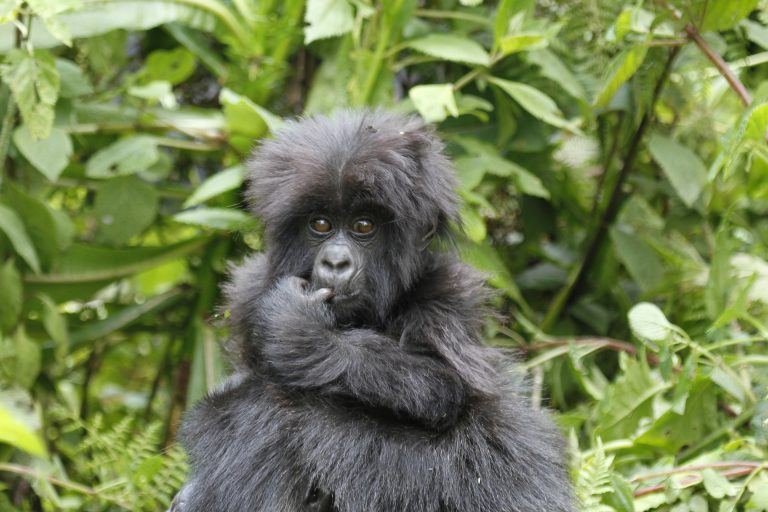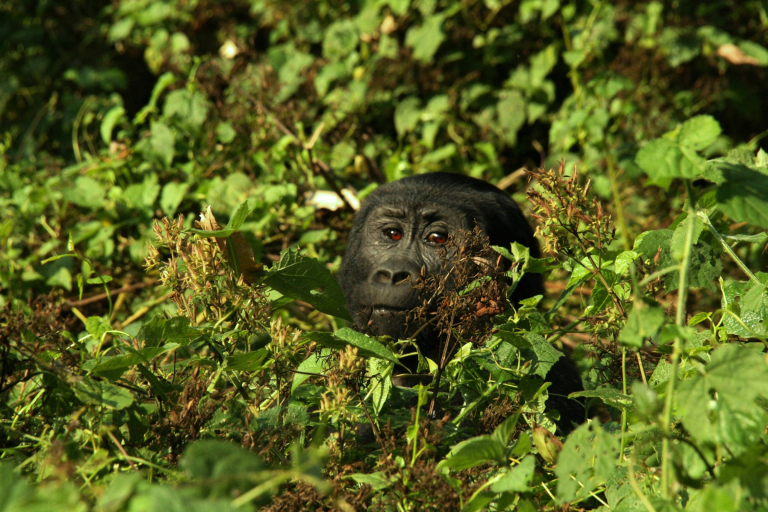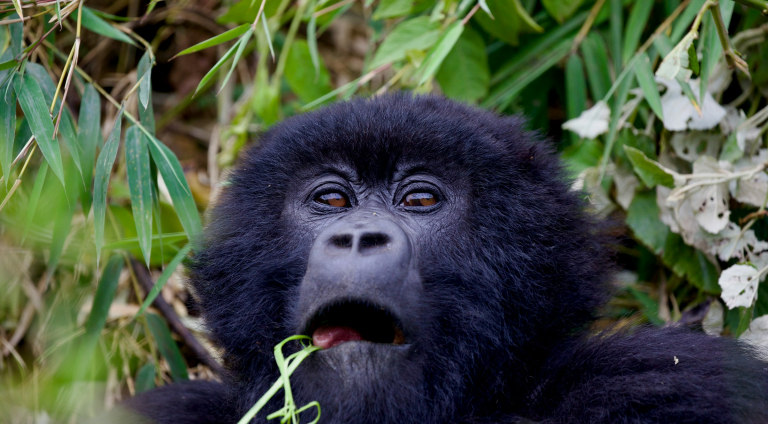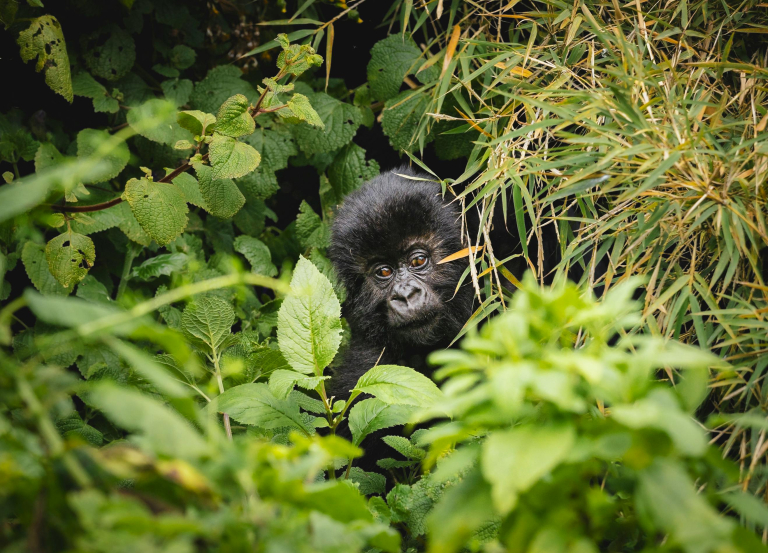

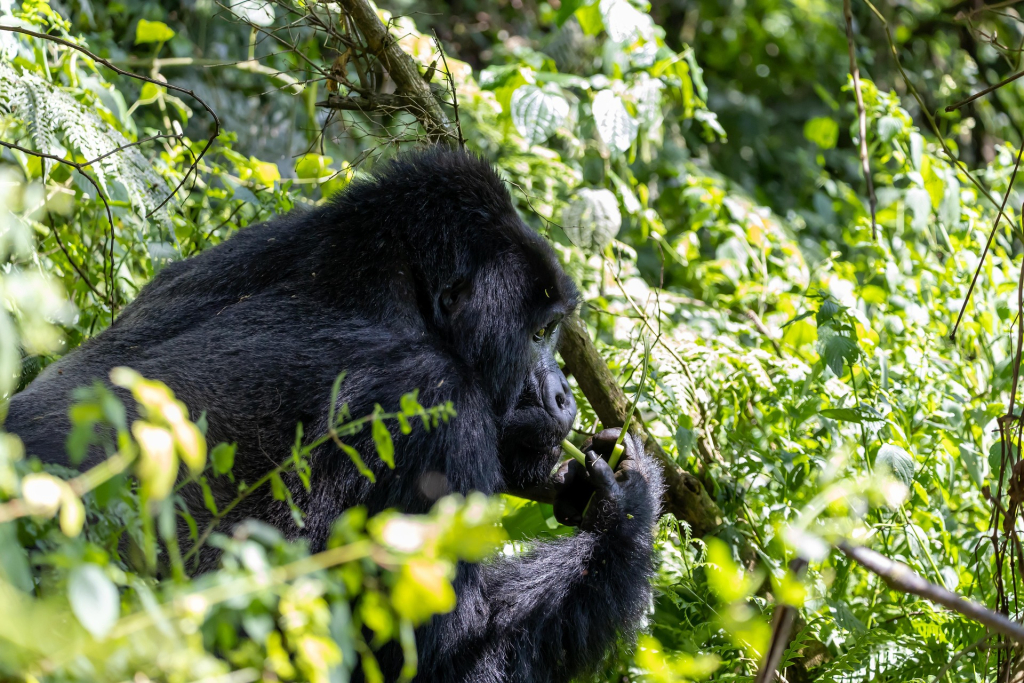
Decades ago, mountain gorillas were close to extinction because of a number of reasons that I will talk about later in the article.
It was through conservation that gorillas managed to increase in number. In 2018, the IUCN moved mountain gorillas from Critically Endangered to Endangered because their numbers had grown above 1,000.
This success happened because of several things, and one of them is gorilla trekking. When you trek gorillas, you give back to them. The money used to buy gorilla permits is instead used to protect these animals.
So why were mountain gorillas close to extinction?

Let us look at some of the common reasons that pushed this great ape species close to extinction. I will try to explain them clearly.
Predators
Mountain gorillas have only one known predator, and that is the leopard. Although leopards are rarely found in gorilla habitats, gorillas still fear them.
The large size and weight of mountain gorillas scare away many animals that would like to hunt them. Gorillas are very strong.
There are only a few cases where leopards have attacked gorillas.
Loss of Habitat
The biggest cause of gorilla extinction is loss of habitat. A lot of forest destruction has been going on because of population growth.
People clear forests to build homes, which reduces the space for gorillas. Others cut down forests for firewood or to farm.
Building new roads and infrastructure has also led to clearing of forests.
Poaching
People hunt gorillas for many reasons, such as food, bush meat, illegal trade, and traditional medicine.
Killing gorillas for food has reduced slowly, but they are still harmed by traps set to catch other animals like antelopes and bush pigs. These traps hurt or kill gorillas too.
However, stealing baby gorillas is still a big problem.
Infectious Diseases
Mountain gorillas share over 98% of human DNA, and this makes them easily affected by human diseases. The problem is, they do not have strong immunity.
If a gorilla gets a virus or illness—even one that is not harmful to humans—it can kill the whole group. In the 1990s, an Ebola outbreak killed many primates, including gorillas.
Some mountain gorillas already have skin infections like scabies and other breathing problems. These can spread to other gorillas when they meet.
Wars
This has been a serious issue in Congo for many years. Civil wars are a big danger to gorillas, especially in Virunga National Park in DRC.
Gorillas can sense danger from far and try to hide. In some cases, they try to defend themselves by fighting back, and this leads to their death.
A big thank you goes to all the conservation programs and people who have gone gorilla trekking. The number of gorillas is now over 1,000 and is expected to grow with time.
So do you want to help save gorillas from extinction? Book your gorilla safari today with any of these gorilla trekking companies.
Planning a trip? Compare the best Uganda tour operators and ask for a quote.